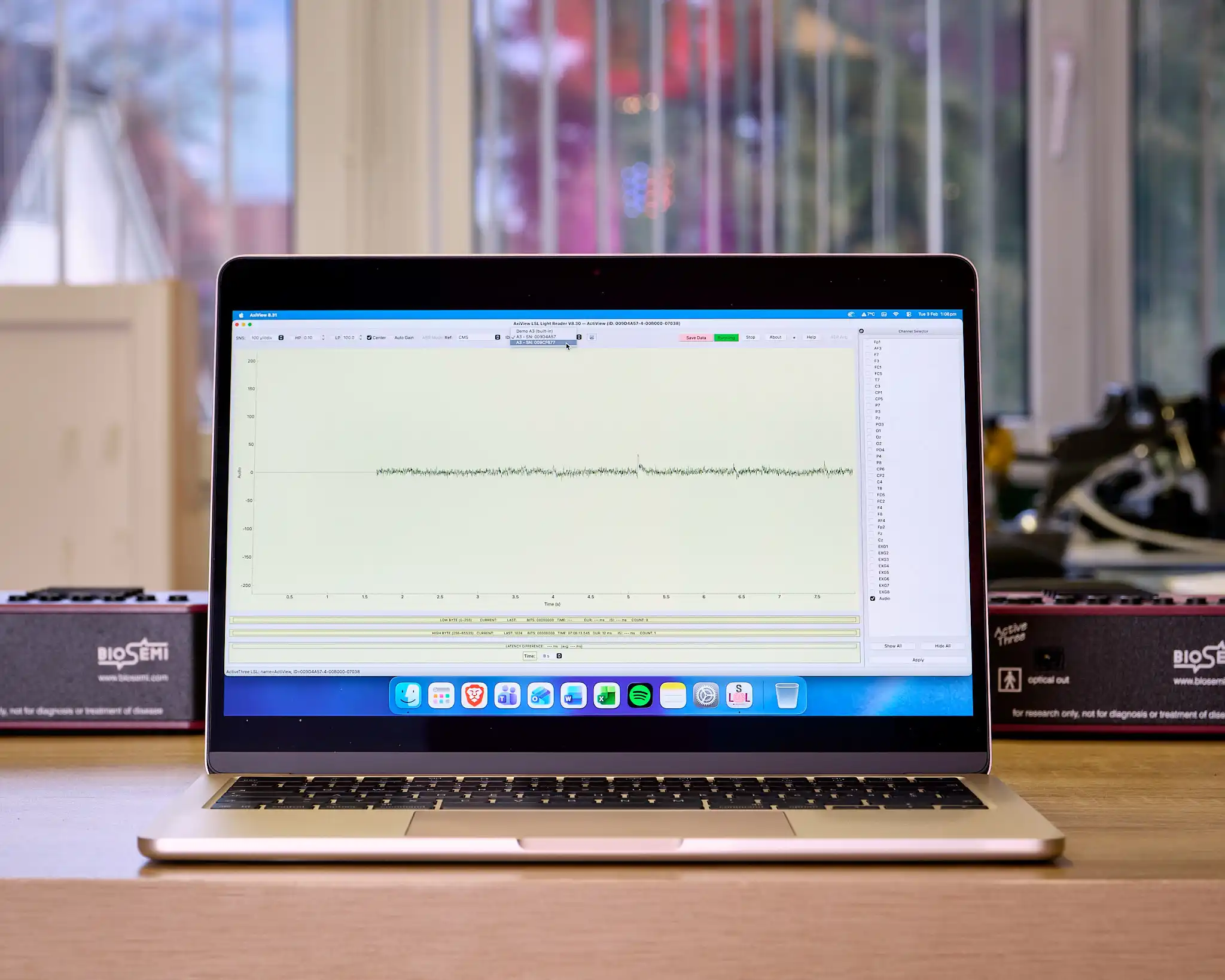
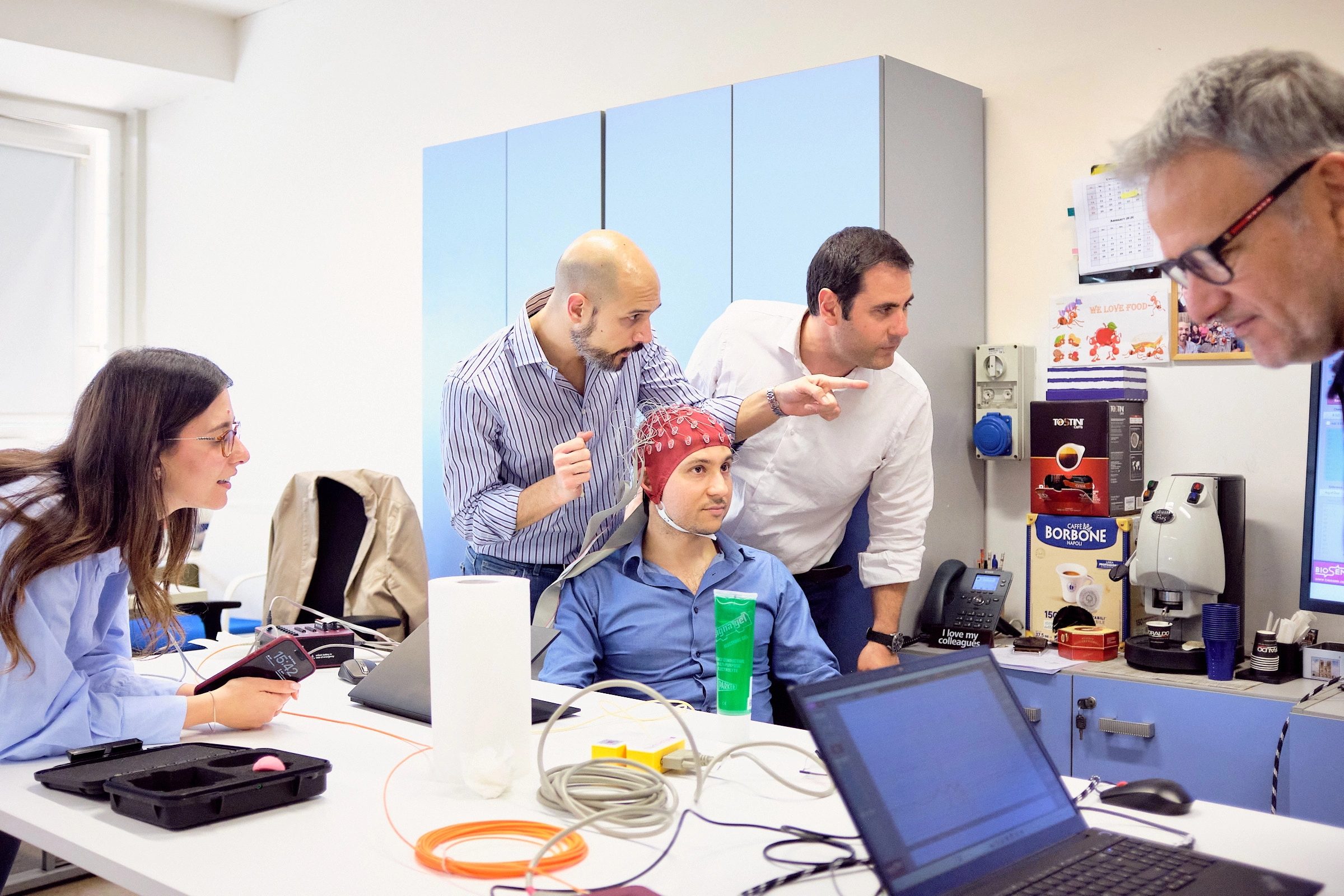
The Bioengineering Research Group at the University of Naples “Parthenope” recently expanded its neurophysiology research capabilities through the acquisition of a BioSemi ActiveThree EEG system from NEUROSPEC. The new system complements the group’s extensive experience in MEG signal analysis and supports its growing research activities in EEG, brain connectivity, source localisation, brain-computer interfaces, and human–machine interaction.
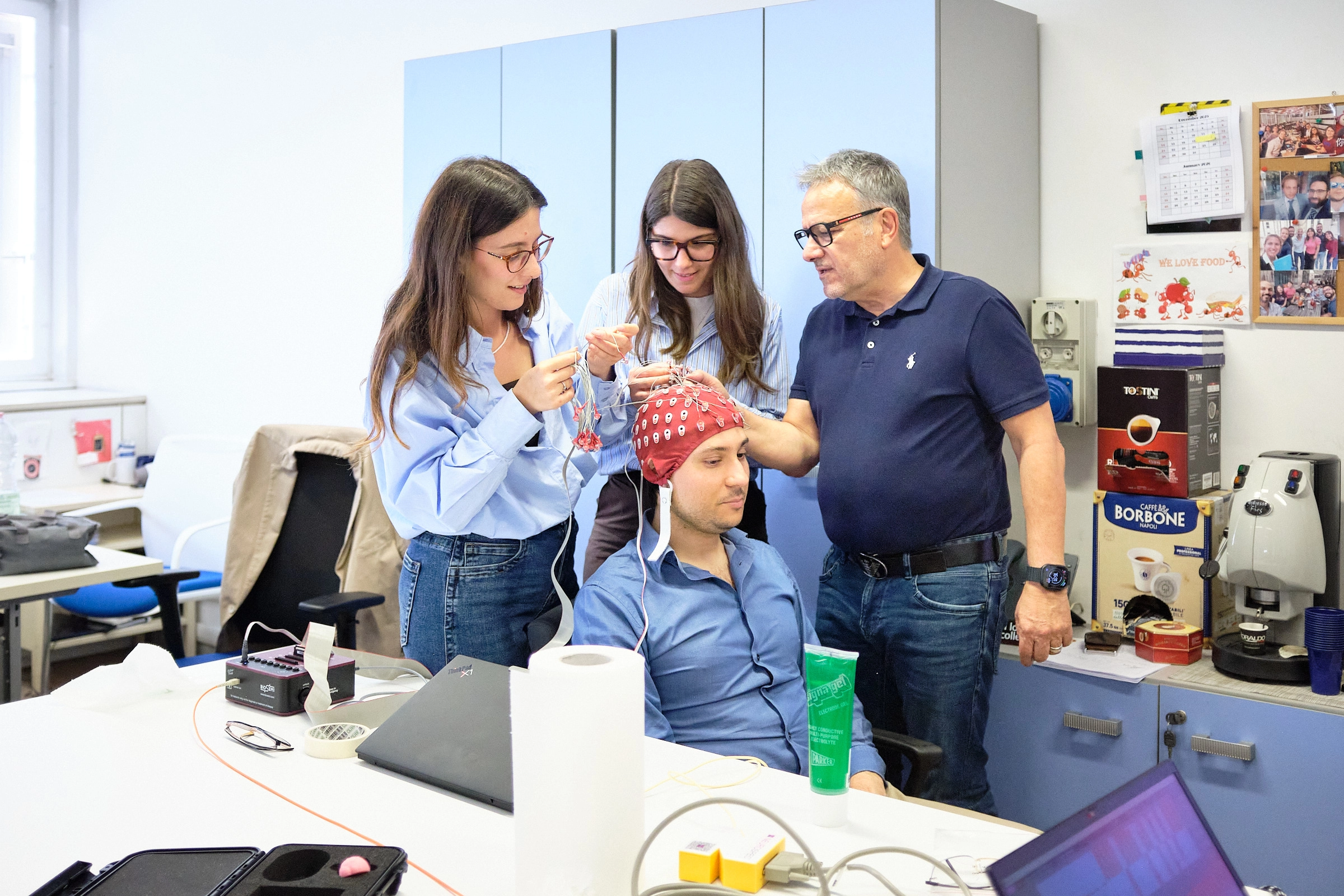
The Bioengineering Research Group focuses on the development of advanced methodologies for processing and analysing electroencephalographic (EEG) and magnetoencephalographic (MEG) signals. A major focus of the group is the investigation of functional brain connectivity, aiming to quantify information transfer between different brain regions and improve our understanding of large-scale brain network organisation.
The group has contributed significantly to this field through the development of the Phase Linearity Measurement (PLM), a connectivity metric based on phase synchronization between neural signals. Building on this work, the team subsequently introduced advanced methods for assessing cross-frequency connectivity and has more recently expanded into deep learning-based beamforming approaches for source localisation and brain signal analysis.
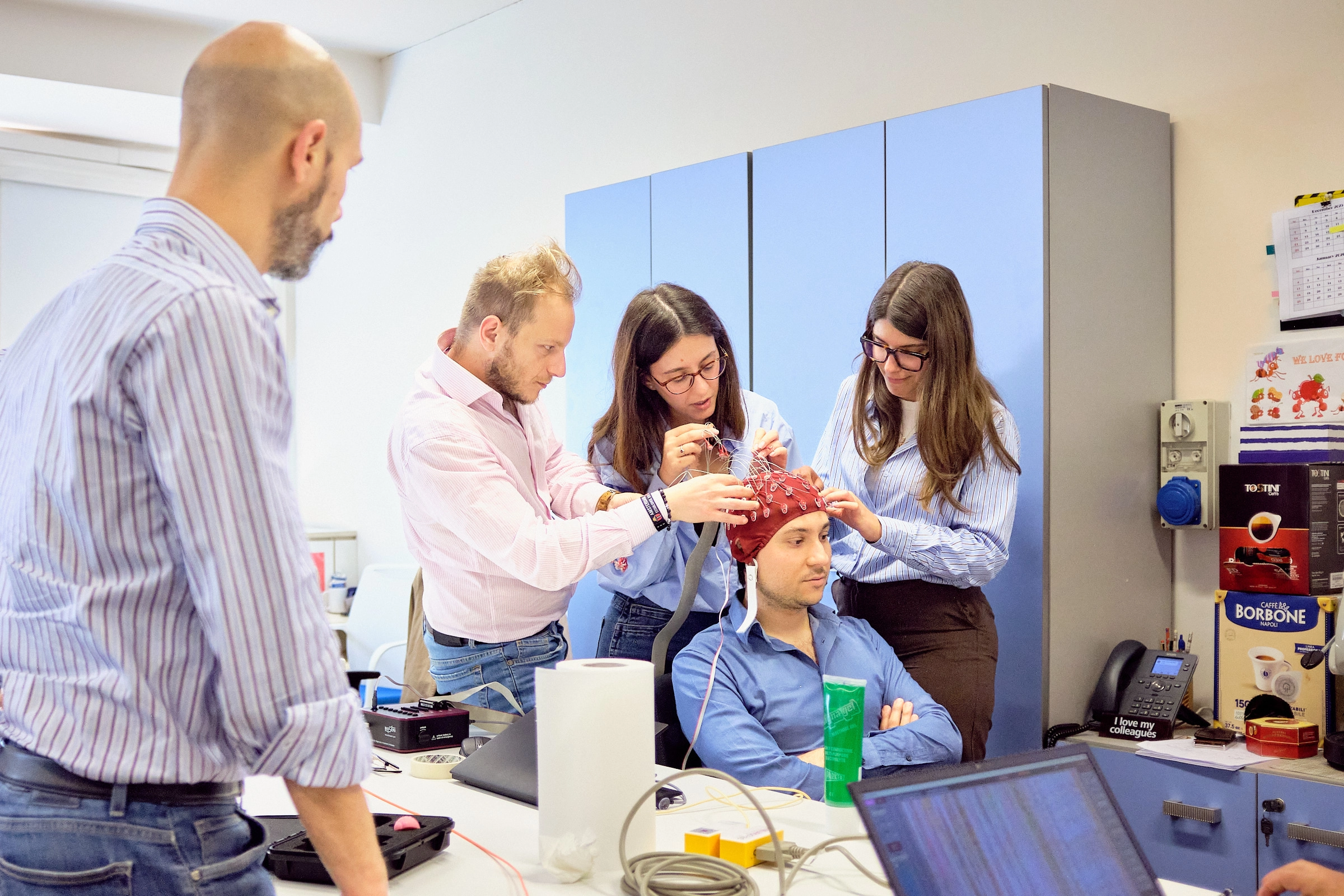
With a strong background in MEG research, the group required a high-quality EEG acquisition system that could extend their experimental flexibility while maintaining the signal quality needed for advanced connectivity and source-level analysis. The system needed to support demanding research protocols, enable reliable EEG recordings across different participant groups, and provide a practical platform for future translational and real-world neuroscience applications.
NEUROSPEC recommended the BioSemi ActiveThree system based on the group’s need for high-quality EEG data, flexible experimental design, and compatibility with advanced signal processing workflows.
The ActiveThree platform provides active electrode technology, high-resolution EEG acquisition, and excellent signal stability, making it well suited for research applications where data quality is critical. For connectivity analysis, source localisation, and cross-frequency coupling studies, reliable signal acquisition is essential, as even small artefacts or inconsistencies can affect downstream analysis and interpretation.
NEUROSPEC identified ActiveThree as the appropriate solution for several key reasons:
The implementation of the BioSemi ActiveThree system enables the Bioengineering Research Group to acquire high-quality EEG data for advanced brain connectivity and source localisation research. The system provides a flexible platform for investigating neural dynamics across a wide range of experimental paradigms, from fundamental neuroscience studies to applied neurotechnology research.
By adding ActiveThree to their research infrastructure, the group can complement MEG recordings with EEG-based experiments, broaden participant access, and develop new methodologies for analysing brain function in both controlled and more naturalistic settings.
The system also supports future research directions in brain-computer interfaces and human–machine interaction, where portability, ease of use, and high-quality EEG acquisition are essential for moving beyond traditional laboratory-based paradigms.
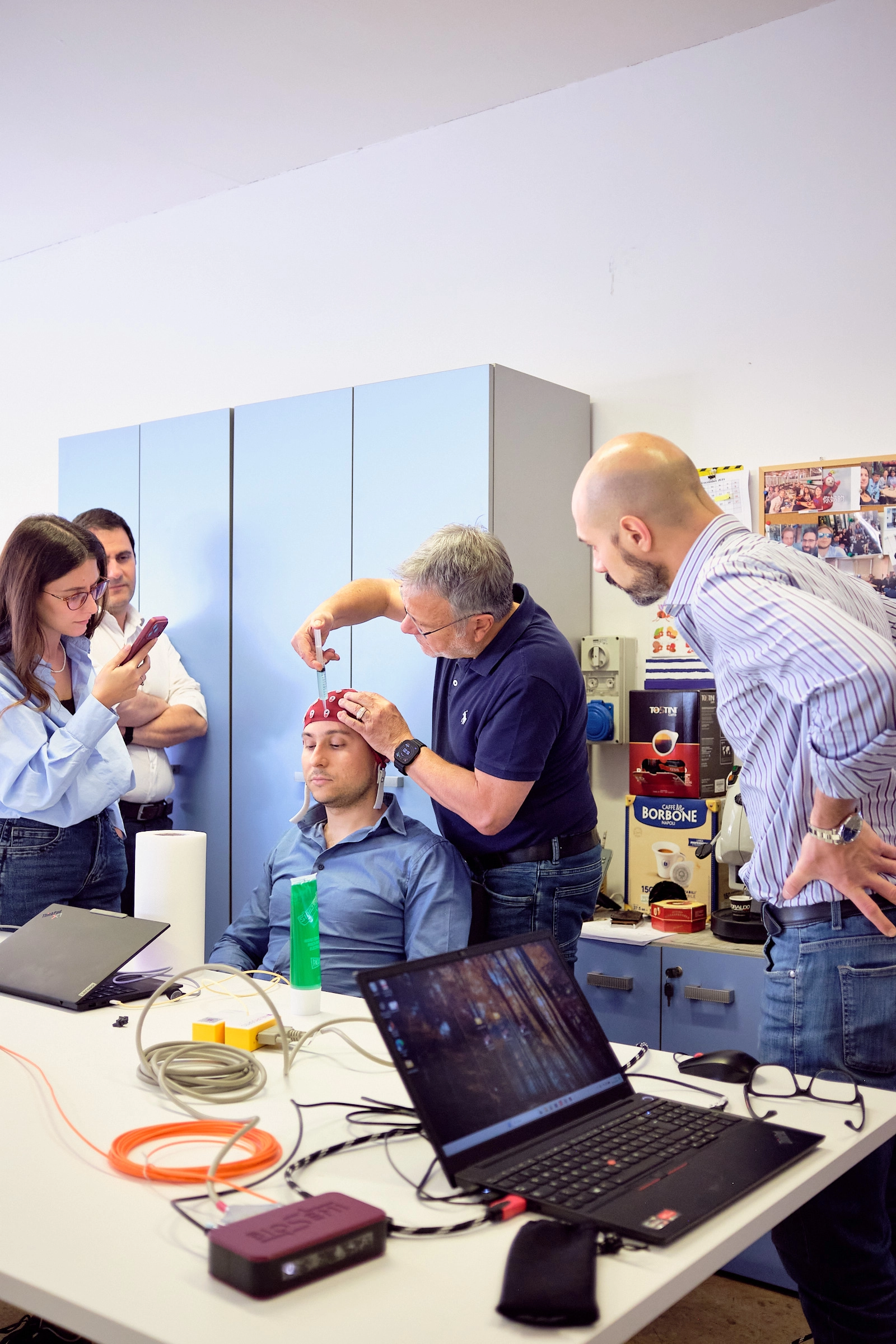
NEUROSPEC’s consultation and equipment provision to the University of Naples “Parthenope” demonstrates our expertise in matching advanced EEG systems to specific scientific and methodological requirements. By understanding the group’s existing MEG expertise, connectivity research focus, and future application goals, NEUROSPEC helped identify a system that supports both their current research and long-term development.
This collaboration highlights how careful equipment selection can strengthen existing neurophysiology research programs and open new opportunities for advanced EEG, brain connectivity, and translational neuroscience applications.
Baselice, F., Sorriso, A., Rucco, R. and Sorrentino, P., 2018. Phase linearity measurement: A novel index for brain functional connectivity. IEEE Transactions on Medical Imaging, 38(4), pp.873–882.
Sorrentino, P., Ambrosanio, M., Rucco, R. and Baselice, F., 2019. An extension of Phase Linearity Measurement for revealing cross frequency coupling among brain areas. Journal of NeuroEngineering and Rehabilitation, 16(1), p.135.
Sorriso, A., Sorrentino, P., Rucco, R., Mandolesi, L., Ferraioli, G., Franceschini, S., Ambrosanio, M. and Baselice, F., 2019. An automated magnetoencephalographic data cleaning algorithm. Computer Methods in Biomechanics and Biomedical Engineering, 22(14), pp.1116–1125.
Rucco, R., Baselice, F., Ambrosanio, M., Vettoliere, A., Sorrentino, P., Riccio, M.P., Bravaccio, C., Silvestrini, P. and Granata, C., 2020. Brain connectivity study by multichannel system based on superconducting quantum magnetic sensors. Engineering Research Express, 2(1), p.015038.
Sorrentino, P., Ambrosanio, M., Rucco, R., Cabral, J., Gollo, L.L., Breakspear, M. and Baselice, F., 2022. Detection of cross-frequency coupling between brain areas: An extension of phase linearity measurement. Frontiers in Neuroscience, 16, p.846623.
Franceschini, S., Ambrosanio, M., Autorino, M.M., Maqsood, S. and Baselice, F., 2025. Magnetoencephalographic source localization and reconstruction via deep learning. Frontiers in Neuroscience, 19, p.1578473.